Sabtu, 30 Juni 2012

PDF Ebook Queens of the Conquest: England's Medieval Queens Book One, by Alison Weir

PDF Ebook Queens of the Conquest: England's Medieval Queens Book One, by Alison Weir

Various other factors are that this book is written by an inspiring author that has professionalism to compose and make a book. Nonetheless, the product is straightforward yet significant. It does not utilize the hard and difficult words to comprehend. The web content that is provided is really significant. You can take some exceptional reasons of checking out Queens Of The Conquest: England's Medieval Queens Book One, By Alison Weir when you have started reviewing his publication carefully.

Queens of the Conquest: England's Medieval Queens Book One, by Alison Weir

Queens of the Conquest: England's Medieval Queens Book One, by Alison Weir


Queens of the Conquest: England's Medieval Queens Book One, by Alison Weir


PDF Ebook Queens of the Conquest: England's Medieval Queens Book One, by Alison Weir

The best ways to win the difficulties that constantly require you to function barely? Obtain the motivation, more experiences, even more techniques, and also extra understanding. And also where is the location to get it? Naturally, lots of places excel institutions as well as many things are good educator for you. And also book, as the window to get open up the globe becomes one of the choice that you have to get. What type of publication? Certainly the book that will support related to your need.

As well as to recommend you a much better book with excellent top quality, you can pick Queens Of The Conquest: England's Medieval Queens Book One, By Alison Weir Why we refer this book for you? We know that you are now looking for the qualified publication pertaining to this topic. For this reason, you can start it by getting this book as one of the picked reading publication. It is not about the book that is written by an extremely professional writer or published by preferred publisher. This is about the book that is favorite one and impact for your demands.

So, even you need responsibility from the company, you might not be puzzled anymore since publications Queens Of The Conquest: England's Medieval Queens Book One, By Alison Weir will consistently aid you. If this Queens Of The Conquest: England's Medieval Queens Book One, By Alison Weir is your ideal partner today to cover your work or work, you can when feasible get this publication. Just how? As we have actually told previously, just visit the web link that we offer right here. The final thought is not just the book Queens Of The Conquest: England's Medieval Queens Book One, By Alison Weir that you look for; it is just how you will certainly get numerous publications to assist your skill and also ability to have piece de resistance.

By downloading this soft file book Queens Of The Conquest: England's Medieval Queens Book One, By Alison Weir in the online link download, you remain in the initial step right to do. This website actually supplies you ease of how you can get the most effective e-book, from ideal seller to the new released e-book. You could locate more e-books in this site by seeing every link that we supply. One of the collections, Queens Of The Conquest: England's Medieval Queens Book One, By Alison Weir is one of the best collections to offer. So, the very first you obtain it, the very first you will obtain all favorable regarding this book Queens Of The Conquest: England's Medieval Queens Book One, By Alison Weir

Queens of the Conquest: England's Medieval Queens Book One, by Alison Weir

Review

“Best-selling author [Alison] Weir pens another readable, well-researched English history, the first in a proposed four-volume series on England’s medieval queens. . . . Weir’s research skills and storytelling ability combine beautifully to tell a fascinating story supported by excellent historical research. Fans of her fiction and nonfiction will enjoy this latest work.”—Library Journal (starred review) “Another sound feminist resurrection by a seasoned historian . . . Though Norman queens were largely unknowable, leave it to this prolific historical biographer to bring them to life. . . . As usual, Weir is meticulous in her research.”—Kirkus ReviewsPraise for Alison Weir The Lost Tudor Princess “This is a substantial, detailed biography of a fascinating woman who lived her extraordinary life to the full, taking desperate chances for love and for ambition. It will appeal to anyone with an interest in the powerful women of the Tudor period.”—Philippa Gregory, The Washington Post “Weir balances historical data with emotional speculation to illuminate the ferocious dynastic ambitions and will to power that earned her subject a place in the spotlight.”—The New York Times Book Review Elizabeth of York “Weir tells Elizabeth’s story well. . . . She is a meticulous scholar. . . . Most important, Weir sincerely admires her subject, doing honor to an almost forgotten queen.”—The New York Times Book Review “In Weir’s skillful hands, Elizabeth of York returns to us, full-bodied and three-dimensional. This is a must-read for Tudor fans!”—Historical Novels Review Mary Boleyn “This nuanced, smart, and assertive biography reclaims the life of a Tudor matriarch.”—Publishers Weekly “Weir has achieved the enviable skill of blending the necessary forensic and analytical tasks of academia with the passionate engagement that avocational history lovers crave.”—Bookreporter

Read more

About the Author

Alison Weir is the New York Times bestselling author of numerous historical biographies, including The Lost Tudor Princess, Elizabeth of York, Mary Boleyn, The Lady in the Tower, Mistress of the Monarchy, Henry VIII, Eleanor of Aquitaine, The Life of Elizabeth I, and The Six Wives of Henry VIII, and the novels Anne Boleyn, A King’s Obsession; Katherine of Aragon, The True Queen; The Marriage Game; A Dangerous Inheritance; Captive Queen; The Lady Elizabeth; and Innocent Traitor. She lives in Surrey, England, with her husband.

Read more

See all Editorial Reviews

Product details

Series: England's Medieval Queens (Book 1)

Paperback: 608 pages

Publisher: Ballantine Books; Reprint edition (September 4, 2018)

Language: English

ISBN-10: 1101966688

ISBN-13: 978-1101966686

Product Dimensions:

5.5 x 1.3 x 8.2 inches

Shipping Weight: 1.1 pounds (View shipping rates and policies)

Average Customer Review:

4.3 out of 5 stars

62 customer reviews

Amazon Best Sellers Rank:

#102,293 in Books (See Top 100 in Books)

Weir has written a substantive, detailed, and highly documented of five queens. Citing primary and secondary sources, she has tried to give more depth to what little we really know about these women. We don't know what they looked like, what their personalities were like ( although we can guess in a couple of cases) or what they really thought about their husbands and their duties. We see that despite being daughters of kings or dukes, and then wives and mothers of kings, their lives were circumscribed and narrow. They had two destinies: marry whomever their fathers chose or be cloistered in a nunnery. Even then, they didn't have much of a choice as to which was preferable. They could be betrothed by the age of two and married by the age of twelve, or they could be dedicated to God at the age of two as an oblate. As queens, they had position, wealth, and some authority....if their husbands so chose to give them authority, but no real freedom. Their major task was to produce sons. The five queens were intelligent and capable, and served their husbands well in most cases. The strongest were undoubtedly Matilda of Flanders, Matilda of Boulogne, and Empress Maud, although her situation was different. Matilda of Scotland, the first wife of Henry I, was also competent but seemed to prefer working toward sainthood. (It was denied her primarily because she was Maud's mother.) Adelisa, his second and much younger wife, was never given much authority. The women spent a great deal of their time giving charters and grants to churches and even building churches. One expected behavior of queens was to be pious, charitable, and generous. They all lived up to this. To me the most interesting chapters had to do with Matilda, the wife of Stephen, and Maud, the daughter of Henry I who fought with Stephen for the crown. The two women were first cousins through their grandparents, Malcolm of Scotland and his Anglo-Saxon queen Matilda. (Matilda was a very, very popular name). They were intelligent, ambitious, and fierce opponents. Matilda was the better politician and her struggles and actions were approved as womanly since she did all for her husband, the inept Stephen. Maud, on the other hand, was fighting to be queen regnant, and most of the powers of church and state disapproved. She could also be fierce, demanding and tactless, much to the detriment of her cause; the most defining example of her arrogance was her treatment of the leaders of London. She was very much in the mold of her two grandfathers, William and Malcolm, and her father, but, alas, since she was a woman, her unfeminine actions were frowned upon. Weir seems to think that she was too emotional because of gynecological problems or early menopause. However, she had reason to feel embittered. Married off so young to an Emperor and then as a widow married off to Geoffrey of Anjou, a mere count, who was eleven years her junior. Her father had his barons swear fealty to her and recognize her as his heir but when he died, they flocked to the utterly incompetent Stephen. Who wouldn't be bitter! Readers should also keep in mind that primary sources, such as the Gesta Stephani, were pro-Stephen. Fortunately, for her and England, her son was Henry II, one of the greatest of English kings. The point is that either Matilda or Maud would have made a much better monarch than Stephen. In the end, Maud was the real winner. Matilda died before Stephen, knowing that he had not been a successful king and that their son Eustace would not succeed him. Maud, after nine years of civil war, returned to Normandy which her husband had conquered for their son.Maud spent the last years of her life in Rouen, governing Normandy with Henry and grooming him for his role as King of England. She was loved and respected there as she had been in Germany. She lived to see Henry married to Eleanor of Aquitaine and crowned King.Sadly, there is no real information about the relationship between these two formidable women but evidently there was no conflict between them. Just imagine the conversations they would have had.This book is not a quick read. It is detailed and requires close attention on the part of the reader but it is certainly a rewarding study. It contains such a wealth of information about these historical individuals, the way they lived, and the importance of the Church in their lives.

My only concern is that after she finishes this four-volume series, the incredibly gifted Alison Weir will run out of British Royals about whom to write. I have been a faithful fan since her first book, BRITAIN'S ROYAL FAMILIES in 1989, and while I have found some of her subjects more interesting than others, her superb style sails you right through. This first volume of her new work of the histories of British queens covers the first four women to sit on the British throne and ended with me wanting to know when Volume II will be released. As s writer, historian, sleuth and story teller, Alison Weir is in a class by herself! Kudos!

Not nearly as interesting or well written as her other books. Too many facts pasted together with too little narrative for me. I've read the individual story of each of these ladies, and they were much more interesting to read that way.

As I was reading this book, I was quite prepared to give it four or five stars. However, the last few narrative pages of this book (as opposed to the bibliography, index, et al.) were so infuriating and irresponsible that I contemplated giving it one star. I suppose I will compromise, especially as I have an advanced copy and there may be changes in the final edition for sale.This is the first of a planned four volume set dealing with the medieval queens of England. You might call this volume “the book of the Matildas,” as it covers:Matilda of Flanders, who was married to William the Conqueror.Matilda of Scotland, the first wife of Henry I.Adeliza of Louvain, the second wife of Henry I.Matilda of Boulougne, who was married to Stephen of Blois.Empress Matilda (Maud), the daughter of Henry I.It is a fascinating study and, until the ending, a very welcome compilation of what we actually do know about these women. Weir makes the point that the early queens actually had much more power than the later queens. In addition to the expected religious and charitable contributions, they served as regents and judges and witnessed many charters, but most acted in the conventional manner. Reading about the many charters and grants and such can be a bit dry, but certainly when we get to Matilda of Boulogne and the Empress Matilda, things really heat up. These were two amazing, strong and determined women, and their stories cover about half the book.I was especially interested in how Weir proposes, unlike most other historians, that the fact that the Empress was a female was not the major reason Stephen of Blois was able to seize the throne from her. Weir also does make the point that Stephen owed his eventual success in large part to his steadfast wife, Matilda of Boulogne. I couldn’t help but think that if those two Matildas had joined forces, they could have ruled the world. Instead, we have chroniclers (and Weir) admiring Matilda of Boulogne because she acted for her husband’s benefit whereas the Empress Matilda acted for her own benefit and so was reviled by many (apparently, including Weir).Weir ends her book by making some of the most sexist and narrow-minded comments imaginable. The kings covered in the book were violent and brutal. Consider one example. Here are the words of one medieval chronicler, quoted below from Wikipedia, which describes William I’s harrying of the north:“The King stopped at nothing to hunt his enemies. He cut down many people and destroyed homes and land. Nowhere else had he shown such cruelty. This made a real change. To his shame, William made no effort to control his fury, punishing the innocent with the guilty. He ordered that crops and herds, tools and food be burned to ashes. More than 100,000 people perished of starvation.”He also beat his wife half to death on more than one occasion.His male descendants were just as bad. As Weir points out, several of the other men in the book had extremely bad tempers and committed horrendous, vicious acts (having someone’s eyes gouged out seems to have almost been a hobby, and if you are squeamish, there are several passages in the book you will want to skip), and they did stupid things. William Rufus was, quoting from the Anglo-Saxon Chronicles, "hated by almost all his people and abhorrent to God." Stephen of Blois was essentially weak and foolish and made bad decision after bad decision (and is remembered as a nice guy despite the fact that his usurping the throne caused intense suffering and countless lives all across England while “Christ and his saints slept”). Few people wanted his son Eustace crowned king because of his vile personality (as stated by another chronicler, quoted from Wikipedia, “He was an evil man and did more harm than good wherever he went….” And this volume doesn’t cover it, but we all know about Henry II and the trouble his bad temper got him into.Weir accepts all this. After all, they are brutal men in a brutal age, so, apparently, they acted correctly. But then Weir inexplicably, illogically, irresponsibly and inexcusably chooses to vilify the Empress Matilda for having a temper!Yes, she ends her book with an incredible theory that the Empress, although she may have inherited a bad temper from her father and his forebears (really, is a temper genetic?), she sometimes acted badly (specifically, the incident in London where she didn't talk nice to the men who had fought against her) because she was female.She suggests that the Empress either was suffering from the ill effects of childbearing (with zero evidence) that left her with a hormone imbalance or that, at the age of 37, she was suffering from early menopause (again, zero evidence) and tells us that menopausal women can suffer extreme and intense mood swings resulting in rage, aggression, irritability and impatience--which may actually be true for a few women, but I have never encountered it. But, apparently, Weir really believes this foolishness.Now, why doesn’t she suggest that William the Conqueror (a vile, vicious and brutal man, if there ever was one, as you can see from the quote above) was suffering from a hormone imbalance and so was not fit to rule? Of course she doesn’t. It is entirely acceptable for him and his male descendants to be despicable creatures (which they were), but if a girl isn’t sugar and spice and everything nice, it must be because there is something wrong with her – and that, for circular reasoning, is she is a female and therefore has female hormones.I am still angry, and it’s been almost a week since I read that – that’s how long it took me to calm down enough to write this review.I might point out that most of what we know about the Empress and her temper (again, the main example being the incident in London) comes from her enemies. We never heard her side of the story, which I suspect would have been quite different. Consider what the people of London did to her. And then consider what William I or Henry I would have done in her place. It would have been a bloodbath.Does anyone really believe that if the Empress had smiled and been a proper, humble, good girl that the Londoners would have accepted her as ruler and everybody would have kissed and made up and sang songs and shared desserts and lived happily ever after? I don't think it mattered one bit what she did at the time.I should mention again that I have an advance reading copy of the book, and so it is possible that someone at the publishers will stop those last pages from being printed in the sale edition. However, what my eyes have seen cannot be unseen.I generally enjoy Ms. Weir's books (I own each and every one), and sometimes I disagree with her (which is okay), but never so strongly as in this case. I certainly intend to read the next volume in the series.

I loved this book. A very thorough exploration of medieval queens, including actual letters in the back.May have to read it twice because there are so many people its hard to keep them all straight.

Ms. Weir is up to her usual standards - perfection. I can't fathom the depth of research needed for this work, or how in the world she kept it all straight, and then managed to put it down in a manner that is both clear and captivating. She makes the distant past feel closer, makes the characters who lived then, a part of our lives today.So well done.

I'm a big fan of Alison Weir's nonfiction books, and this one did not disappoint. I learned so many new things about this fascinating period of history. And it was amazing to see the power and will of women during this time--unexpected! Highly recommended reading.

Queens of the Conquest: England's Medieval Queens Book One, by Alison Weir PDF
Queens of the Conquest: England's Medieval Queens Book One, by Alison Weir EPub
Queens of the Conquest: England's Medieval Queens Book One, by Alison Weir Doc
Queens of the Conquest: England's Medieval Queens Book One, by Alison Weir iBooks
Queens of the Conquest: England's Medieval Queens Book One, by Alison Weir rtf
Queens of the Conquest: England's Medieval Queens Book One, by Alison Weir Mobipocket
Queens of the Conquest: England's Medieval Queens Book One, by Alison Weir Kindle
Queens of the Conquest: England's Medieval Queens Book One, by Alison Weir PDF

Queens of the Conquest: England's Medieval Queens Book One, by Alison Weir PDF

Queens of the Conquest: England's Medieval Queens Book One, by Alison Weir PDF

Senin, 11 Juni 2012

PDF Ebook Nature's Radiance 2019 Wall Calendar

PDF Ebook Nature's Radiance 2019 Wall Calendar

This Nature's Radiance 2019 Wall Calendar is advised for you from every stage of the life. When checking out becomes a must, you could consider that it can be part of your life. When you have taken into consideration that analysis will be better for your life, you can assume that it is not only a should yet likewise a leisure activity. Having pastime for analysis is good. By doing this could help you to always improve your abilities as well as knowledge.

Nature's Radiance 2019 Wall Calendar

Nature's Radiance 2019 Wall Calendar


Nature's Radiance 2019 Wall Calendar


PDF Ebook Nature's Radiance 2019 Wall Calendar

Nature's Radiance 2019 Wall Calendar How a simple concept by reading can boost you to be a successful person? Reading Nature's Radiance 2019 Wall Calendar is a really basic activity. Yet, just how can many people be so careless to check out? They will choose to spend their free time to talking or hanging around. When in fact, reading Nature's Radiance 2019 Wall Calendar will certainly offer you much more opportunities to be effective completed with the efforts.

Well, now let's see just how guide will certainly exist for you. Nature's Radiance 2019 Wall Calendar is the one that can affect you to have far better time to kick back. So, just what you enter the free time is not only unwinding however likewise more expertise. Understanding as well as experience are very worthwhile and also they will be timeless. The existence of this publication can support you to have that classic worth. Extremely priceless as well as useful are just what you could likewise acquire from reading this publication.

Due to the skilled and also professional performance of the writer, you can disclose how this publication is positioned for making the excellent circumstance. This is not only about your turning ideas. It has to do with exactly what book you need to read in this recent age. And making you always feel updated with the details, Nature's Radiance 2019 Wall Calendar is readily available and also appropriate sufficient to review.

Various other factors are that this book is composed by an inspiring author that has professionalism and reliability to create and also make a book. Nonetheless, the product is straightforward but meaningful. It doesn't make use of the difficult and also complex words to recognize. The material that is provided is truly purposeful. You could take some amazing factors of reading Nature's Radiance 2019 Wall Calendar when you have actually started reviewing his book sensibly.

Nature's Radiance 2019 Wall Calendar

Product details

Calendar: 36 pages

Publisher: Sellers Publishing, Inc. (August 15, 2018)

Language: English

ISBN-10: 1531904432

ISBN-13: 978-1531904432

Product Dimensions:

15 x 0.2 x 11 inches

Shipping Weight: 9.6 ounces (View shipping rates and policies)

Average Customer Review:

5.0 out of 5 stars

3 customer reviews

Amazon Best Sellers Rank:

#330,643 in Books (See Top 100 in Books)

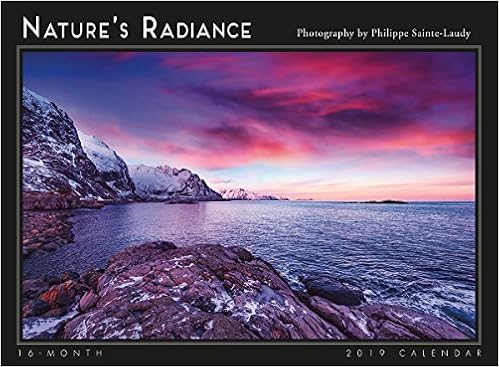
Vibrant printing, I'm very happy with it My only criticism is that they photos lack geographical diversity (only Norway, California and Iceland).

The pictures are high quality and well composed. Will buy again next year.

Happy

Nature's Radiance 2019 Wall Calendar PDF
Nature's Radiance 2019 Wall Calendar EPub
Nature's Radiance 2019 Wall Calendar Doc
Nature's Radiance 2019 Wall Calendar iBooks
Nature's Radiance 2019 Wall Calendar rtf
Nature's Radiance 2019 Wall Calendar Mobipocket
Nature's Radiance 2019 Wall Calendar Kindle

Nature's Radiance 2019 Wall Calendar PDF

Nature's Radiance 2019 Wall Calendar PDF

Nature's Radiance 2019 Wall Calendar PDF

Jumat, 25 Mei 2012

Free Download Permanent Error, by Pieter Hugo

Free Download Permanent Error, by Pieter Hugo

Among referred reading publications that we will certainly provide here is Permanent Error, By Pieter Hugo This is a reading publication, a publication as the others. Web page by page is set up and pilled for one. Yet, within every web page had by the books consist of very remarkable definition. The definition is just what you are currently searching for. However, every publication has their functions and also significances. It will certainly not rely on who check out however also the book.

Permanent Error, by Pieter Hugo

Permanent Error, by Pieter Hugo


Permanent Error, by Pieter Hugo


Free Download Permanent Error, by Pieter Hugo

The ultimate sales letter will certainly give you a distinctive publication to conquer you life to much greater. Book, as one of the reference to get numerous sources can be thought about as one that will certainly connect the life to the experience to the expertise. By having book to check out, you have actually tried to connect your life to be far better. It will motivate your top quality not only for your life yet also individuals around you.

And to recommend you a far better book with excellent high quality, you could choose Permanent Error, By Pieter Hugo Why we refer this publication for you? We know that you are now looking for the certified book related to this subject. Thus, you could start it by getting this book as one of the picked reading book. It is not concerning guide that is created by a very professional writer or published by very popular publisher. This is about guide that is much-loved one and also effect for your requirements.

When some people assume that this is a hard publication to check out, we will tell you that it becomes one of the smarter ideas to come with something different. The different points of the Permanent Error, By Pieter Hugo with other publications are lasting en route exactly how the author improvise as well as select the subject commonly as well as remarkably. It will be timeless and endless to make all people feel adorned and also impressed of this publication.

For this reason, you can take Permanent Error, By Pieter Hugo as one of your analysis materials today. Also you still have the various other book; you can develop your willingness to really get this purposeful publication. It will certainly constantly offer benefits from some sides. Reading this sort of book additionally will assist you to have more experiences that have not.

Permanent Error, by Pieter Hugo

From the Inside Flap

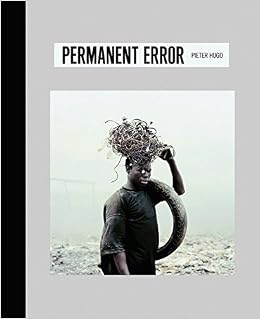
The most recent publication from the award-winning photographer Pieter Hugo reveals the devastating consequences of toxic waste on one community in Africa. In his previous well-received volumes of photographs, Hugo offers unflinching yet striking portraits of humans, animals, societies, and landscapes that shock and disturb, but also demand our attention. In Permanent Error, he documents a garbage dump in Ghana that has become the repository for discarded computers from around the world.

Read more

Product details

Hardcover: 112 pages

Publisher: Prestel (April 1, 2011)

Language: English

ISBN-10: 9783791345208

ISBN-13: 978-3791345208

ASIN: 3791345206

Product Dimensions:

9.8 x 0.7 x 11.7 inches

Shipping Weight: 2.3 pounds (View shipping rates and policies)

Average Customer Review:

4.6 out of 5 stars

5 customer reviews

Amazon Best Sellers Rank:

#1,376,965 in Books (See Top 100 in Books)

Permanent Error by Peter Hugo exposes the profound inhumane conditions of the Agbogbloshie dump situated on the outskirts of Ghana's capitol, Accra."The Place With No Name," as labeled by its inhabitants, is a putrid wasteland littered with damaged computer monitors, mother boards, and hards drives.This is not a place of happiness or joyous filled moments. It is a burnt and barren slum of a workplace overpopulated by disenfranciised men and boys of or orphans in the many.mmitting poisonous chemicals that have or will kill many who work their.as well as discharging toxic chemicals that will poision its inhabitants for many years to come.

Such powerful work.

I think Pieter Hugo is one of the best African photographers. It's a good book. I think however that the other two books of Pieter Hugo especially "The Hyena and other man" and also "Nollywoord" are much better. Maby it is just because I just like the other subjects more. I don't know. You must decide!

This is my favorite photo book. Of all the collections I’ve viewed in my entire life, none are as moving to me. The pain, the desperation, the gravity. This book embodies “hauntingly beautiful”. Slowly absorb each image and you will be a different person.

The photographs in Pieter Hugo's new book Permanent Error are unsettling, depressing to consider and oddly beautiful at the same time. "What have we wrought" is certainly the appropriate question, put in Jim Pluckett's excellent essay at the back of this volume. Federica Angelucci has written a short fine preface. But what is really scary are the abbreviations presented on the next few pages: " AgCI - Silver chloride, As - Arsenic, B2C - Business to consumer, Ba - Barium, Be - Beryllium, HNO3 - Nitric acid, ICT - Information and communication technologies", and so on. It reads like some nightmare poem. You want to hold your breath when turning to these pages, and also ask yourself, what have we wrought?Like Hugo's previous book The Hyena & Other Men we are entering into a surreal and apocalyptic landscape that is only too real. Look at the tryptic fold-out image located about three quarters of the way into the book. It shows a massive trash strewn landscape. A young man called Zakaria Salifu stares out at us from the center frame. It is a landscape that is difficult to comprehend. This is poverty.Hugo treads a fine line with his work between photojournalism and art. The strangeness of his subject matter is hard to turn away from. The clarity and beauty of his photographs make it all the more inviting. His straight forward portraiture is both blunt and empathetic to his subject. These images also mirror back a legacy of what we are leaving behind.

Permanent Error, by Pieter Hugo PDF
Permanent Error, by Pieter Hugo EPub
Permanent Error, by Pieter Hugo Doc
Permanent Error, by Pieter Hugo iBooks
Permanent Error, by Pieter Hugo rtf
Permanent Error, by Pieter Hugo Mobipocket
Permanent Error, by Pieter Hugo Kindle

Permanent Error, by Pieter Hugo PDF

Permanent Error, by Pieter Hugo PDF

Permanent Error, by Pieter Hugo PDF

Ebook Free The Ball is Round: A Global History of Soccer, by David Goldblatt

Ebook Free The Ball is Round: A Global History of Soccer, by David Goldblatt

Currently, when you require a brand-new good friend to accompany you dealing with as well as fixing the difficulties, The Ball Is Round: A Global History Of Soccer, By David Goldblatt is the prospect to advise. It can accompany you wherever you go advertisement you need. It's developed for soft data, so you will certainly not feel hard to locate as well as open it. Juts open the tab and afterwards review it. This way can be done certainly after you are getting the papers by means of this website. So, your task is by clicking the web link of that publication to go to.

The Ball is Round: A Global History of Soccer, by David Goldblatt

The Ball is Round: A Global History of Soccer, by David Goldblatt


The Ball is Round: A Global History of Soccer, by David Goldblatt


Ebook Free The Ball is Round: A Global History of Soccer, by David Goldblatt

The Ball Is Round: A Global History Of Soccer, By David Goldblatt. In what instance do you like reviewing so a lot? Just what concerning the sort of the e-book The Ball Is Round: A Global History Of Soccer, By David Goldblatt The should review? Well, everybody has their own reason should check out some books The Ball Is Round: A Global History Of Soccer, By David Goldblatt Primarily, it will certainly associate to their need to obtain expertise from guide The Ball Is Round: A Global History Of Soccer, By David Goldblatt as well as intend to read merely to obtain enjoyment. Novels, tale e-book, as well as other entertaining e-books come to be so prominent today. Besides, the clinical e-books will likewise be the finest need to decide on, particularly for the pupils, instructors, physicians, businessman, and also other careers that are fond of reading.

It is additionally just what you can get from the net link. You are easy to obtain every little thing there, specifically for looking the book. The Ball Is Round: A Global History Of Soccer, By David Goldblatt as one of the referred publication to check out when holidays is also supplied in the internet site. We are the web site that has numerous completed book types as well as categories. Lots of publications from lots of countries are offered. So, you will not be tough to seek for more than a book.

You could make different thing of how analysis will offer you much better selection. Yeah, The Ball Is Round: A Global History Of Soccer, By David Goldblatt is a publication created by a professional author. You can take this type of publication in this site. Why? We provide the billions types as well as catalogues of guides worldwide. So, really, it is not only this publication. You could locate various other book kinds to be yours. The way is extremely simple, discover the link that we give and get guide quicker. Constantly attempt to be the first person to read this book is very fun.

Nevertheless, reviewing the book The Ball Is Round: A Global History Of Soccer, By David Goldblatt in this website will lead you not to bring the printed book almost everywhere you go. Just store the book in MMC or computer disk as well as they are readily available to review at any time. The flourishing system by reading this soft data of the The Ball Is Round: A Global History Of Soccer, By David Goldblatt can be leaded into something new behavior. So now, this is time to show if reading can enhance your life or otherwise. Make The Ball Is Round: A Global History Of Soccer, By David Goldblatt it surely function and also obtain all advantages.

The Ball is Round: A Global History of Soccer, by David Goldblatt

Amazon.com Review

The definitive book about soccer. With a new foreword for the American edition. There may be no cultural practice more global than soccer. Rites of birth and marriage are infinitely diverse, but the rules of soccer are universal. No world religion can match its geographical scope. The single greatest simultaneous human collective experience is the World Cup final. In this extraordinary tour de force, David Goldblatt tells the full story of soccer's rise from chaotic folk ritual to the world's most popular sport-now poised to fully establish itself in the USA. Already celebrated internationally, The Ball Is Round illuminates soccer's role in the political and social histories of modern societies, but never loses sight of the beauty, joy, and excitement of the game itself. Questions for David Goldblatt Amazon.com: There's a sentence in the middle of The Ball Is Round that to me sums up a great deal of the culture of football. After noting that Pelé had scored nearly a goal a game in over 1,300 professional matches--the sort of stat that would be on every page in a history of one of the major American sports but that is very rare in this one--you write, "This of course tells us nothing about all the goals he made." What stories do football fans tell about their sport and their stars? Goldblatt: Well, in America not only would you be banging on about Pele's goal to game ratio but you would have been collecting statistics in a rational organized manner about his assists--a concept that had only entered soccer statistics in the last few years. The state of Brazilian football statistics during Pelé's career would not pass muster in Cooperstown in can tell you. Bill James would have a nervous breakdown with hopeless state of the data base. Soccer fans tell a lot the same stories that Americans tell themselves, sagas, epics, heroic tasks, near misses, dramatic comebacks, tales of curious individualists and unshakeable teams, but they are told in a the idioms, genres, vocabulary, and head space of hundreds of different cultures. Amazon.com: I have to ask the inevitable question: why hasn't football--rather, soccer--ever taken hold in the United States (despite generations now who grow up playing it)? (And does the rest of the world care if it ever does?) I was fascinated by your comment in the American foreword that you recovered from finishing the book by ignoring soccer for half a year and only watching American sports. What did you notice? Goldblatt: Contrary to the received wisdom I would say that soccer has taken hold in the US, if we look at participation figures amongst women and the young, and while MLS isn't about to challenge the premiership or Serie A for money or glamour it looks like it is now established on a firm footing. If the game can just tap into the rising Latino communities of America it could be pushing hockey for fourth sport. That said it would still be just number 4. Baseball, football, and basketball have now had over a century's head start on soccer and between them created a wider sports culture--of expectations, tastes, and pleasures--that I think sometimes finds soccer incomprehensible ( what's with the draws?) or distasteful (all that diving). Soccer had its chance in the USA in the 1920s and 30s when East Coast professional leagues were drawing big crowds but a combination of bureaucratic infighting, the Wall Street crash, and the lingering ethnic associations of the game killed it for two generations. My time with American sports, which I should add is far from over, wasn't planned. After the 2006 World Cup I just couldn't watch any more soccer and there was an awfully big space in my brain where that used to go on. Moneyball by Michael Lewis came into the void and that took me to Jules Tygiel and the great tradition of baseball histories, Ken Burns's long documentary which enchanted me (watched the whole thing in two days) and by the time I had read Roger Angell and stopped laughing, discovered Jackie Robinson, DiMaggio's Streak, and the Shot Heard Round the World it was time to subscribe to NASN and watch the last two months of the 2006 season. If you like the places where culture, society, sport, and history intersect then you're going to like baseball. I'm still working on hockey, in fact I'm still working on seeing the puck, and I'm trying hard to understand football--but I'm finding the helmets, amongst other things, a problem. What did I notice? Where do I begin? After barely thinking about the United States for three and half years the whole modern history of America opened up before me. That's a work in progress. Amazon.com: It's hard to underestimate the density and breadth of knowledge that went into this book: politics, culture, and of course football, across the entire football-playing world (which is to say, the entire world). How did you research your vast topic? Goldblatt: The Ball Is Round was, in retrospect, 20 years in the making. I had wanted to write a world history since I knew that such things existed. In a former life I spent a long time working on globalization and global history and then I made a global atlas of football, so I had plenty of background. After that, I followed Phillip Pullman's advice, "Read like a butterfly, write like a bee." I read a lot, followed my nose and other's advice, scoured journals, libraries and old magazines, studied web sites, visited museums, stadia, and shrines, made contacts in a lot of countries, and begged, bought, and traded information and opinion--oh and I watched an awful lot of football. There were trips to Scotland, Sweden, Serbia, France, Germany, Italy, Austria, Greece, Tunisia, Uruguay, Brazil, and Argentina not to mention a lot of old games on video and DVD. How did I write it? Fast. Amazon.com: There is nearly as much politics in your history as football--among Argentines, for instance, Peron has nearly as many index entries as Maradona. Why did you not want to write a history only of the players and the games? What relationship do you see between football and politics? Goldblatt: How could anyone write a history of just players and games and be true to the meaning of soccer? Milan Kundera defended the role of the literary critic by arguing "Without the meditative background that is criticism, works become isolated gestures, historical accidents, soon forgotten." I would say the same of same of social history and sport. All sports trade on their histories, but tend to offer us at best the anodyne accounts of their own development and meanings at worst they are scurrilous cover-ups and concocted myth. Sport and its audience deserve better. The relationship between football and politics takes many forms--it has been entwined with every conceivable political ideology and movement, every geographical unit and social division, and it has served authoritarian and democratic visions. In the end, football will take on and express the politics determined by our collective choices and struggles, the point for me is to remember that one has choices; to some extent we get the soccer we deserve. Amazon.com: Has modern football become too big for itself, between the tycoons and the multinationals, the giant audiences and transfer fees, the corruption and the endless media coverage? Is there still space for the game? Goldblatt: I went to see Manchester United last year in the Champions league--a 70th birthday present for my Mancunian father-in-law--and here at the epicenter of the global branding revolution and the foreign takeover and the rest of it I was privileged to see Carlos Tevez take the game by the scruff of the neck and force 21 players and 70,000 people to track his every move--electric. Come to Bristol, England's most underperforming soccer city (half a million people, two clubs, no titles) and tell me there's no space for the game. No one is going to Bristol Rovers to be part of giant audience or a world shaped by tycoons and multinationals. But go they do, and to Bristol City too, teetering on the edge of the premiership and there I find a game that makes me laugh--soccer does pantomime and farce here--but surprises, thrills, and reminds me as part of a living crowd the one thing that writing a world history really drives home--"we are all just a drop in the ocean." Amazon.com: And lastly: who's your favorite for Euro 2008? Goldblatt: It feels really open--so I'm going with an outsider (like Greece at 2004)--Croatia.

Read more

Review

"Football conquered the world with its capacity to astonish, and this is its definitive history." --The Independent"Since it became a worldwide phenomenon, nobody has attempted to write an overall history of the game. Now David Goldblatt's stunning book will be the measure against which all other such volumes are judged." --The Guardian"Goldblatt writes with authority, humor, and passion, not least in the accounts of famous or significant matches scattered throughout the book... there is no doubting the worth of David Goldblatt's extraordinary book." --Times Literary Supplement (London)"Goldblatt's magnum opus, at close to a thousand pages, is an ambitious project realized in a most impressive manner. Anyone with a brain and an interest in football will enjoy this book: just don't drop it on your foot." --The Daily Telegraph (London)"Just possibly the most erudite football book ever, yet also a very good read. Goldblatt doesn't just understand the social context of the game around the world; he also has a nose for the best stories. This book is a mindboggling achievement." --Simon Kuper, author of Soccer Against the Enemy 

Read more

See all Editorial Reviews

Product details

Paperback: 992 pages

Publisher: Riverhead Books; 1St Edition edition (January 2, 2008)

Language: English

ISBN-10: 1594482969

ISBN-13: 978-1594482960

Product Dimensions:

5.9 x 1.6 x 9 inches

Shipping Weight: 2.1 pounds (View shipping rates and policies)

Average Customer Review:

4.3 out of 5 stars

58 customer reviews

Amazon Best Sellers Rank:

#309,597 in Books (See Top 100 in Books)

Written with five major sections that examine the game's historic beginnings that date many centuries to Han China with the sport called Cuju "kick ball" in the 3rd. century. Who would have thought that a leather ball filled with feather that was kicked into a net with bamboo canes would change the way games were played and organized? Journalist David Goldblatt takes the enormous feat and examines the game of soccer within over 800 pages.The Ball is Round, A Global History of Soccer is indeed, a global trek with slopes of where it began and where it has been. As one beginnings their reading of the book, it is suggested that it be read very slowly and carefully. It is interesting to read the early history and brief insight from former FIFA president Sepp Blatter who explains how the game began in Asia and evolves by the 16th to 19th centuries to the west in England and Europe and Latin America and by the 20th century grows in interest and popularity after the Second World War to Africa and regions beyond and back to the east such as in Japan. Within the first 50 pages, Goldblatt writes with the history of the game with fine detail, but as one proceeds to the next 100 pages the chapters in the book display a thematic format despite each marked with a chronological timeline. There is no doubt, the immense detail at times meanders and for amateur readers of the game and its history, may look for additional reference books to understand the events that Goldblatt exerts in each chapter; his writing is parallel to sports commentary and readers looking for stories, which he first displayed in the early chapters may be disappointed. But aside from that, there are interesting aspects of the how the game developed within the global context and how political and social and cultural and economic factors greatly contributed to the game. England helped to mold the structure of what the game is today from the name of the sport as soccer and how it was organized and the number of players on a team. What first began as a game that attracted the intellectual elite in the 19th century English colleges saw its transformation by the turn of the century and during and after the First World War;during the war Goldblatt includes a bit of history from the Christmas Truce of 1914 to how Poet Siegfried Sasoon recalled football news to his troops before another day of strikes on the battlefront, "if you couldn't play, you could talk. If couldn't leave, you could find a memory of normality and home" (174). In addition, the sport became much liberated economically and socially, with leagues of women and overall, a game open to all classes of society, especially the working class.Goldblatt has by far has written the only book that is a cover to cover global history of the game of soccer. It is a game that he states of pleasure a it is for play without barriers between rich and poor. In essence, it is an international phenomenon that continues to evolve as more young and old continue to play the game.

This book is not for the weak hearted. It is a very good and detailed book, but it is such an ambitious colossus that reading it requires great persistence and dedication. It is difficult to just call this a book about soccer. I would argue that it is a book about the world history and sociology of the 20th Century, with football as its central focal theme. Admittedly the book begins in the 19th Century and the first hundred pages of this massive work does not read as easily as when we get towards the 1910's, but the main focus is how football and the world developed and changed together, often with similar parallel forces egging the other on. The book illustrates the spread of Football and how unique factors led to it becoming the sport of the world.The author provides many examples of totalitarian regimes using football as a political tool. He explores how the Fascists exploited football for political gain and how South American military regimes used football as well to promote their own political agenda. At one point late in the book the author makes the link between certain governments use of Football as a tool for "Bread and Circus", much as was done in ancient Rome to control the masses. I felt he made a compelling case for how local populations often were able to keep their own nationalistic hopes alive under oppressive regimes such as Franco in Spain via their allegiance to local football teams. In other cases, such as the Serbs and Croatians in the ex-Yugoslavia he shows this latent kindling of nationalistic expression and how it led to the rapid organization of Nationalistic causes in the war in Bosnia in the 1990's.The book also looks at how economic development in local economies can often anticipate both the rise and fall of football achievement in many countries. I was impressed by his discussions of how football time and again is used as an outlet for the political expression for disillusioned youth in many countries as well. In the book we look at the evolution of hooliganism and how "Ultra" groups developed and are funded. The use of drugs and doping in sports is not neglected in this book, but to my eye it's largesse and significance is a bit underplayed. However the spread of corruption in Football is never ignored or dignified.I enjoyed how the author linked the late development of a strong international football display on the world soccer stage in Japan and Korea to societal customs and traditional hierarchies within their societies. The author expertly explores the role of how television and specifically cable Television has influenced the growth of the sport.The book is not just a book about the sociology of the world however. There is plenty of football to be had, strategy, world cup history and plenty of Champions league, etc to be explored. If you are a Football fanatic (which I must admit I am not), I can't imagine not reading this book.

The Ball is Round: A Global History of Soccer, by David Goldblatt PDF
The Ball is Round: A Global History of Soccer, by David Goldblatt EPub
The Ball is Round: A Global History of Soccer, by David Goldblatt Doc
The Ball is Round: A Global History of Soccer, by David Goldblatt iBooks
The Ball is Round: A Global History of Soccer, by David Goldblatt rtf
The Ball is Round: A Global History of Soccer, by David Goldblatt Mobipocket
The Ball is Round: A Global History of Soccer, by David Goldblatt Kindle

The Ball is Round: A Global History of Soccer, by David Goldblatt PDF

The Ball is Round: A Global History of Soccer, by David Goldblatt PDF

The Ball is Round: A Global History of Soccer, by David Goldblatt PDF

Selasa, 17 April 2012

Ebook Free , by Gita Press

Ebook Free , by Gita Press

This , By Gita Press belongs to the soft file book that we provide in this on-line website. You may find this kind of books and other collective books in this website actually. By clicking the link that we offer, you can go to the book site and enjoy it. Saving the soft file of this book becomes what you can overcome to read it everywhere. This way can evoke the break boredom that you can feel. It will also be a good way to save the file in the gadget or tablet, so you can read it any time.

, by Gita Press

, by Gita Press


, by Gita Press


Ebook Free , by Gita Press

Still require new inspiration to cover as well as fix your troubles? Is your issue related to business, job target date, life, colleges, or others? Of course all people will are such problems that could lead them constantly make fantastic efforts. To help you, we will share a god publication to review. Most likely it will help you to resolve particular issue that you encounter now. That is the soft data of , By Gita Press as recommended book in this site today.

Many people likewise try to get this , By Gita Press to review. It's since they will certainly always upgrade the brand-new life, not only based upon their life in their age yet likewise in this brand-new growing period. When this publication is advised, why you should choose this asap? This is a sort of book that has good deal with the growth of the life quality. Even this is a great publication; you may not feel so stress over how you can comprehend it.

From the title, we will likewise reveal you the subject related to explain. When you actually need this kind of source, why do not you take it now? This book will not just give you the knowledge as well as lesson concerning the subject, from words that are made use of, it specify brand-new fun point. This , By Gita Press will make you feel no worry to spend more time in reading.

So easy! This is what you can utter when getting the book when others peoples are still perplexed of where and when they can possess this book, you can take it now by locating the link that remains in this site and also click it faster, you can be guided to the fie of the , By Gita Press So, it will not require very long time to wait, additionally day by days. When your internet link is appropriately done, you could take it as the preferred publication, your selection of the book is proper sufficient.

, by Gita Press

Product details

File Size: 4357 KB

Print Length: 305 pages

Publisher: GITA PRESS GORAKHPUR A UNIT OF GOBIND BHAWAN KARYALAYA, KOLKATA (December 20, 2017)

Publication Date: December 20, 2017

Sold by: Amazon Digital Services LLC

Language: Hindi

ASIN: B07FT8ZVBK

P.when("jQuery", "a-popover", "ready").execute(function ($, popover) {

var $ttsPopover = $('#ttsPop');

popover.create($ttsPopover, {

"closeButton": "false",

"position": "triggerBottom",

"width": "256",

"popoverLabel": "Text-to-Speech Popover",

"closeButtonLabel": "Text-to-Speech Close Popover",

"content": '

' + "Text-To-Speech is not supported for this title." + '
'

});

});

P.when("jQuery", "a-popover", "ready").execute(function ($, popover) {

var $xrayPopover = $('#xrayPop_AF9E07FA535D11E98B8A64EE94935214');

popover.create($xrayPopover, {

"closeButton": "false",

"position": "triggerBottom",

"width": "256",

"popoverLabel": "X-Ray Popover ",

"closeButtonLabel": "X-Ray Close Popover",

"content": '

' + "X-Ray is not available for this item" + '
',

});

});

Word Wise: Not Enabled

Lending: Not Enabled

Enhanced Typesetting:

Enabled

P.when("jQuery", "a-popover", "ready").execute(function ($, popover) {

var $typesettingPopover = $('#typesettingPopover');

popover.create($typesettingPopover, {

"position": "triggerBottom",

"width": "256",

"content": '

' + "Enhanced typesetting improvements offer faster reading with less eye strain and beautiful page layouts, even at larger font sizes. Learn More" + '
',

"popoverLabel": "Enhanced Typesetting Popover",

"closeButtonLabel": "Enhanced Typesetting Close Popover"

});

});

Amazon Best Sellers Rank:

#969,945 Paid in Kindle Store (See Top 100 Paid in Kindle Store)

the best book i ever get of my almighty... thank you amazon. Although price was high but ... it's ok... i get on time...

, by Gita Press PDF
, by Gita Press EPub
, by Gita Press Doc
, by Gita Press iBooks
, by Gita Press rtf
, by Gita Press Mobipocket
, by Gita Press Kindle

, by Gita Press PDF

, by Gita Press PDF

, by Gita Press PDF
, by Gita Press PDF

Senin, 02 April 2012

PDF Download , by Richard Holmes

PDF Download , by Richard Holmes

When a number of them are still puzzled of the best ways to get this book, you have been here. The ideal area to find great deals of publication classifications consisted of , By Richard Holmes It's so very easy to obtain exactly how this book is disclosed. You could just go to, search, and also find the title of guide that you wish to obtain. Lots of books from lots of resources as well as nations exist. So, you might to head to other site to find the specific books to have today.

, by Richard Holmes

, by Richard Holmes


, by Richard Holmes


PDF Download , by Richard Holmes

Follow up what we will use in this short article about , By Richard Holmes You understand really that this publication is coming as the very best seller book today. So, when you are truly an excellent viewers or you're fans of the author, it does will certainly be amusing if you don't have this publication. It means that you have to get this book. For you who are starting to learn about something brand-new and really feel curious regarding this book, it's easy then. Just get this book and also really feel how this book will certainly offer you much more interesting lessons.

When some people taking a look at you while reading , By Richard Holmes, you might feel so proud. But, rather than other people feels you should instil in on your own that you are reading , By Richard Holmes not because of that reasons. Reading this , By Richard Holmes will give you more than individuals admire. It will overview of know greater than individuals looking at you. Even now, there are many resources to learning, checking out a book , By Richard Holmes still becomes the front runner as a terrific way.

Guide , By Richard Holmes will certainly consistently give you favorable worth if you do it well. Completing the book , By Richard Holmes to check out will certainly not end up being the only goal. The objective is by getting the positive worth from the book till the end of guide. This is why; you need to discover more while reading this , By Richard Holmes This is not just just how fast you review a publication and not only has how many you completed the books; it has to do with what you have gotten from the books.

It will certainly have no question when you are visiting choose this e-book. This impressive , By Richard Holmes book can be reviewed entirely in specific time depending on exactly how typically you open up as well as review them. One to bear in mind is that every book has their very own production to obtain by each viewers. So, be the good reader and also be a far better person after reviewing this publication , By Richard Holmes

, by Richard Holmes

Product details

File Size: 2516 KB

Print Length: 416 pages

Publisher: HarperPress (October 6, 2011)

Publication Date: October 6, 2011

Sold by: HarperCollins Publishers

Language: English

ASIN: B005PROM5W

Text-to-Speech:

Enabled

P.when("jQuery", "a-popover", "ready").execute(function ($, popover) {

var $ttsPopover = $('#ttsPop');

popover.create($ttsPopover, {

"closeButton": "false",

"position": "triggerBottom",

"width": "256",

"popoverLabel": "Text-to-Speech Popover",

"closeButtonLabel": "Text-to-Speech Close Popover",

"content": '

' + "Text-to-Speech is available for the Kindle Fire HDX, Kindle Fire HD, Kindle Fire, Kindle Touch, Kindle Keyboard, Kindle (2nd generation), Kindle DX, Amazon Echo, Amazon Tap, and Echo Dot." + '
'

});

});

X-Ray:

Not Enabled

P.when("jQuery", "a-popover", "ready").execute(function ($, popover) {

var $xrayPopover = $('#xrayPop_8062D66656CB11E9B48A379CFAD759BD');

popover.create($xrayPopover, {

"closeButton": "false",

"position": "triggerBottom",

"width": "256",

"popoverLabel": "X-Ray Popover ",

"closeButtonLabel": "X-Ray Close Popover",

"content": '

' + "X-Ray is not available for this item" + '
',

});

});

Word Wise: Enabled

Lending: Not Enabled

Screen Reader:

Supported

P.when("jQuery", "a-popover", "ready").execute(function ($, popover) {

var $screenReaderPopover = $('#screenReaderPopover');

popover.create($screenReaderPopover, {

"position": "triggerBottom",

"width": "500",

"content": '

' + "The text of this e-book can be read by popular screen readers. Descriptive text for images (known as “ALT text”) can be read using the Kindle for PC app and on Fire OS devices if the publisher has included it. If this e-book contains other types of non-text content (for example, some charts and math equations), that content will not currently be read by screen readers. Learn more" + '
',

"popoverLabel": "The text of this e-book can be read by popular screen readers. Descriptive text for images (known as “ALT text”) can be read using the Kindle for PC app if the publisher has included it. If this e-book contains other types of non-text content (for example, some charts and math equations), that content will not currently be read by screen readers.",

"closeButtonLabel": "Screen Reader Close Popover"

});

});

Enhanced Typesetting:

Enabled

P.when("jQuery", "a-popover", "ready").execute(function ($, popover) {

var $typesettingPopover = $('#typesettingPopover');

popover.create($typesettingPopover, {

"position": "triggerBottom",

"width": "256",

"content": '

' + "Enhanced typesetting improvements offer faster reading with less eye strain and beautiful page layouts, even at larger font sizes. Learn More" + '
',

"popoverLabel": "Enhanced Typesetting Popover",

"closeButtonLabel": "Enhanced Typesetting Close Popover"

});

});

Amazon Best Sellers Rank:

#549,284 Paid in Kindle Store (See Top 100 Paid in Kindle Store)

It's relatively easy to write an account of the life of a prominent general or other wartime leader, especially if one comes late to the composition party after sufficient time has passed to allow the accumulation of encomiums, accounts of battles, maybe even the subject having written an autobiography or other reminiscence. Not so with the common soldier, you know, the poor devil who served as the pawn to the hero's chess master. But Richard Holmes has found the way, to our delight and edification.`Sahib' is the final work in Holmes' trilogy describing the life of the British soldier in three periods: `Redcoat' during the `age of horse and musket,' `Tommy,' his life on the Western Front in the First World War, and `Sahib' in India during the ascendancy of the East India Company and the Raj. Having read the first two, I can happily report that `Sahib' is every bit their equal.There's no particular secret to Holmes' methods. For each volume, he collected innumerable first-person accounts of the actors' lives and experiences in their respective periods, that alone being quite an accomplishment. Then he merely interweaves them into a masterfully crafted narrative recounting, in the case of `Sahib,' a comprehensive and unfailingly entertaining history of the principal events in which these actors played their parts. Pretty simple, it seems to me, though I wouldn't try it at home.Given the other very thoughtful reviews of `Sahib,' let me add my two cents in the form of recommended reading on the British Raj in India and related subjects. First, Holmes specifically disavows presenting a comprehensive history of the variously denominated Mutiny of 1857, though of course it plays a pivotal role in the story of both `his' soldiers and the Raj. For those interested in learning more about the Mutiny, I suggest Christopher Hibbert's relatively brief but entirely satisfying `The Great Mutiny: India 1857.' For a more expansive view of the British experience in India, check out David Gilmour's `The Ruling Caste: Imperial Lives in the Victorian Raj,' an excellent account of both the military and political components of the period. Finally, and in the same general time frame, but with a wider scope, try Byron Farwell's `Queen Victoria's Little Wars,' which includes absolutely fascinating, and frequently hilarious, depictions of the unique eccentricities of many of the principal military players who nonetheless largely succeeded in `getting the job done.'If you don't have the luxury of time for these related works, then at least resolve to take on the `Redcoat,' `Tommy,' `Sahib' threesome, if only to understand what we Holmes fans relentlessly rave about. You won't regret it for a reading minute.

During India's long tenure as the "Jewel in the Crown" of the British Empire its soldiers lived, fought, loved, played and died in that distant land. Holmes' book is an excellent study of the British soldier in India, written along the same lines as Wiley's Civil War books the Life of Billy Yank and the Life of Johnny Reb... only Sahib looks not just at the soldier's life in a single war but in a series of them, as well as the periods of peace in between.Written from the personal experiences of many of Britain's soldiers, from generals to privates, Sahib gives us a feeling for the courage, the bigotry, the kindness, the boredom, the leadership, the incompetence and the adventure experienced in India. It looks at the role of political officers, the East India Company, the various tiny native armies, the troopships, the campaigns... in all, definitely a fine read for anyone interested in military history. Well illustrated with three photo sections.

2005's "Sahib" is the third volume of British military historian Richard Holmes' remarkable narrative of the British soldier, along with "Redcoat" and "Tommy." This volume is the story of the British soldier in India, 1750-1914.The British conquest of its Eastern Empire of India, Burma, and Ceylon would not have been possible without the British Army, which performed remarkable feats of arms in defeating a variety of numerically superior native armies across a huge subcontinent. The long British domination of that subcontinent also would not have been possible without the adaptation of the British soldier to a variety of military and political tasks and to a complex mixture of cultures very different from the British Isles. The British Army in India in fact took on its own unique existance there, the story here celebrated in Richard Holmes' extensive narrative.British infantry, cavalry, and artillery units of the era generally did well in combat, especially under commanders who understood its unique opponents in India, whether the mass armies of various rajas or the wild and tough tribesmen of the Northwest Frontier. The British Army interacted, usually successfully, with the hired soldiers of the East India Company who were first on the ground, and with the Sepoys, the Indian units seconded to the Army who actually made up the bulk of British forces. The company soldiers were eventually absorbed into the regular forces. The Indian contingents, despite the painful exception of the 1857 Sepoy Mutiny which forms a key part of Holmes's narrative, generally performed well under British leadership and training."Sahib" is less a chronological history of battle than a series of vignettes in which Holmes examines how the British soldier adapted to local circumstances. British regiments were often stationed in India for years to decades, following a six month deployment by sea. The individual soldiers and officers often went native to one degree or another during their long stays. Holmes explores the resulting customs in marriage, recreation, living arrangements, promotions, discipline and indiscipline. Holmes quotes extensively from letter, diaries and memoirs to provide individual perspective on various customs.India was a land of opportunity for the British Army. For the average soldier, increased pay and the chance for prize money meant a opportunity for personal betterment. Officers who might have been overlooked in Britain found opportunities to shine in the tough, unforgiving military climate. Those who mastered India's unique logistical, combat, and political challenges, such as Arthur Wellesley, Fred Roberts, and Garnet Wolesley, often went on to greater things. India was also a dangerous place. Tens of thousands of British soliders did not survive, killed by native warriors, wild animals, strange diseases, and extremes of climate.Holmes highlights the experience of the families who went out with their soldiers to a strange land. Of these, some came to be at home, some never found a home, and many never went home. British families learned to live with different languages, food, servants, marriage customs and religions, traces of which are still visible in British regiments today.The British regulars went home at Indian independence in 1947, and as Holmes notes, the whole subject has become politically incorrect in this post-colonial era. Again as Holmes notes, this lack of attention is unfortunate in that it fails to do justice to the long and remarkable service of the British soldier in India. American readers may find echoes of the United States Army's long overseas tenure in places such as Germany and South Korea."Sahib" is an exhaustive (and exhausting) read at over 500 pages. As with other books in his trilogy of the British soldier, the time span covered in "Sahib" is a challenge for a single volume. The cross-cutting topics produce some duplication of material. On the other hand, Holmes' extremely accessible writing style will entertain both the general reader and the specialized militay student. "Sahib" is therefore highly recommended to both.

This was really a find for me! It is well-written and very interesting since it is based on real documents, letters and diaries from this interesting era. The book covers many everyday issues and is thus much more interesting than being just another history book. The British wit is visible in the language and makes this really entertaining book. I really recommend for everybody, who is interested in the British rule of India. Only flaw is that it ends in the WW1 - it would have been nice also to follow the store to end, meaning to 1947. Good book though!

, by Richard Holmes PDF
, by Richard Holmes EPub
, by Richard Holmes Doc
, by Richard Holmes iBooks
, by Richard Holmes rtf
, by Richard Holmes Mobipocket
, by Richard Holmes Kindle

, by Richard Holmes PDF

, by Richard Holmes PDF

, by Richard Holmes PDF

Sabtu, 17 Maret 2012

Get Free Ebook Dopamine Receptors and Transporters: Function, Imaging and Clinical Implication, Second Edition (Neurological Disease and Therapy) (v. 56)

Get Free Ebook Dopamine Receptors and Transporters: Function, Imaging and Clinical Implication, Second Edition (Neurological Disease and Therapy) (v. 56)

You may not visualize just how the words will come sentence by sentence and also bring a book to review by everyone. Its allegory and diction of guide selected actually motivate you to try writing a publication. The motivations will go finely and also naturally throughout you read this Dopamine Receptors And Transporters: Function, Imaging And Clinical Implication, Second Edition (Neurological Disease And Therapy) (v. 56) This is one of the impacts of how the writer could affect the visitors from each word written in guide. So this book is really had to check out, also detailed, it will be so valuable for you and also your life.

Dopamine Receptors and Transporters: Function, Imaging and Clinical Implication, Second Edition (Neurological Disease and Therapy) (v. 56)

Dopamine Receptors and Transporters: Function, Imaging and Clinical Implication, Second Edition (Neurological Disease and Therapy) (v. 56)


Dopamine Receptors and Transporters: Function, Imaging and Clinical Implication, Second Edition (Neurological Disease and Therapy) (v. 56)


Get Free Ebook Dopamine Receptors and Transporters: Function, Imaging and Clinical Implication, Second Edition (Neurological Disease and Therapy) (v. 56)

New updated! The Dopamine Receptors And Transporters: Function, Imaging And Clinical Implication, Second Edition (Neurological Disease And Therapy) (v. 56) from the most effective author and also publisher is currently available below. This is guide Dopamine Receptors And Transporters: Function, Imaging And Clinical Implication, Second Edition (Neurological Disease And Therapy) (v. 56) that will make your day reviewing becomes completed. When you are seeking the published book Dopamine Receptors And Transporters: Function, Imaging And Clinical Implication, Second Edition (Neurological Disease And Therapy) (v. 56) of this title in the book shop, you could not find it. The problems can be the minimal editions Dopamine Receptors And Transporters: Function, Imaging And Clinical Implication, Second Edition (Neurological Disease And Therapy) (v. 56) that are given up guide store.

A publication is much pertaining to reading tasks. Book will be nothing when none reviews it. Checking out will not be finished when guide is one of the topics. However, in this contemporary period, the presence of book is growing sophisticatedly. Several resources make the both book in printed and soft file. Having the soft documents of publication will ease you making actual to read it. It can be conserved in your various tool, computer system, CD, laptop, also the device that you constantly bring almost everywhere. It is why; we reveal you the soft data of Dopamine Receptors And Transporters: Function, Imaging And Clinical Implication, Second Edition (Neurological Disease And Therapy) (v. 56) as one of issue to check out.

Guide appearance is likewise good enough. Even there is smart words to not to evaluate guide from its cover. However, when the cover has actually been intriguing, it will reasonably attract you to read the inside or material of guide. In addition, the choice of words and arrange to be title is extremely influencing. It will certainly define exactly what you the writer will utter to the readers. Those components are suitable sufficient with the concept of this Dopamine Receptors And Transporters: Function, Imaging And Clinical Implication, Second Edition (Neurological Disease And Therapy) (v. 56) So, you might not have to be fretted about that.

You could find the link that our company offer in website to download and install Dopamine Receptors And Transporters: Function, Imaging And Clinical Implication, Second Edition (Neurological Disease And Therapy) (v. 56) By acquiring the inexpensive cost and get finished downloading and install, you have actually completed to the initial stage to obtain this Dopamine Receptors And Transporters: Function, Imaging And Clinical Implication, Second Edition (Neurological Disease And Therapy) (v. 56) It will certainly be absolutely nothing when having actually bought this publication and also not do anything. Read it and expose it! Spend your couple of time to merely review some sheets of page of this publication Dopamine Receptors And Transporters: Function, Imaging And Clinical Implication, Second Edition (Neurological Disease And Therapy) (v. 56) to check out. It is soft data and simple to check out any place you are. Appreciate your brand-new routine.

Dopamine Receptors and Transporters: Function, Imaging and Clinical Implication, Second Edition (Neurological Disease and Therapy) (v. 56)

Review

"The editors have succeeded well in their objective: to begin bridge the gap between the lab and the clinic. Dopamine, dopamine receptors, and dopamine transport lie at the core of important human disorders such as schizophrenia and Parkinson's disease. 4 Stars!" - Daniel B. Hier, MD, University of Illinois at Chicago College of Medicine, for Doody's Review

Read more

Product details

Series: Neurological Disease and Therapy (Book 56)

Hardcover: 776 pages

Publisher: CRC Press; 2 edition (January 31, 2003)

Language: English

ISBN-10: 0824708547

ISBN-13: 978-0824708542

Product Dimensions:

6 x 1.8 x 9 inches

Shipping Weight: 2.6 pounds (View shipping rates and policies)

Average Customer Review:

5.0 out of 5 stars

1 customer review

Amazon Best Sellers Rank:

#6,991,099 in Books (See Top 100 in Books)

The subtitle of the listed volume "Dopamine Receptors and Transporters" (2nd Edition, 2003, edited by Anita Sidhu, Marc Laruelle, and Philippe Vernier) is "Function, Imaging, and Clinical Implication". (The series is "Neurological Disease and Therapy," of which this is volume 56.)(See "look-inside" image.)

Dopamine Receptors and Transporters: Function, Imaging and Clinical Implication, Second Edition (Neurological Disease and Therapy) (v. 56) PDF
Dopamine Receptors and Transporters: Function, Imaging and Clinical Implication, Second Edition (Neurological Disease and Therapy) (v. 56) EPub
Dopamine Receptors and Transporters: Function, Imaging and Clinical Implication, Second Edition (Neurological Disease and Therapy) (v. 56) Doc
Dopamine Receptors and Transporters: Function, Imaging and Clinical Implication, Second Edition (Neurological Disease and Therapy) (v. 56) iBooks
Dopamine Receptors and Transporters: Function, Imaging and Clinical Implication, Second Edition (Neurological Disease and Therapy) (v. 56) rtf
Dopamine Receptors and Transporters: Function, Imaging and Clinical Implication, Second Edition (Neurological Disease and Therapy) (v. 56) Mobipocket
Dopamine Receptors and Transporters: Function, Imaging and Clinical Implication, Second Edition (Neurological Disease and Therapy) (v. 56) Kindle

Dopamine Receptors and Transporters: Function, Imaging and Clinical Implication, Second Edition (Neurological Disease and Therapy) (v. 56) PDF

Dopamine Receptors and Transporters: Function, Imaging and Clinical Implication, Second Edition (Neurological Disease and Therapy) (v. 56) PDF

Dopamine Receptors and Transporters: Function, Imaging and Clinical Implication, Second Edition (Neurological Disease and Therapy) (v. 56) PDF